Maria and I have considered the question, “What is Street Photography?” for years. We’ve settled on this definition:
Street photography documents humans and their behavior, in situations wherein they act spontaneously, generally but not always in urban settings.
Street photography is a visual history of contemporary human life, not just of human cities and environs. Non-spontaneous (posed) photographs of people are similar, but are street portraiture rather than what has long been thought of as street photography. The distinction is important.
Keep in mind that like other photographic genres, street photography is used to index photos, often on social media but also in search criteria, so that people can find precisely the kinds of photos they like. When terms are used too broadly, as they are with “street photography,” they lose all meaning. If you search a social media platform like Bluesky (or, puke, Instagram) you will quickly discover that either people have no idea with street photography is, or they are using the term as a catchall that means, “Please look at my photo.” Wildlife photography, urban photography, architectural photography, as well as cityscapes, beachscapes, and landscapes are all routinely tagged as #streetphotography.
We can either accept the century-plus-year-old definition of street photography and honor it by clearing out all the non-street genres, or we must create a new label for it. I recommend the former, as I believe some people call their photos street photography as a badge of honor despite their being uncomfortable taking photos of people without prior permission. To be clear, photographing people without their permission in public spaces is perfectly legal (except where expressly prohibited by law, e.g. France, and a few other countries.) If you feel uncomfortable doing so, that is about you, not the law. But plainly stated, it means YOU are NOT a street photographer. Please stop claiming to be one by tagging your photos that way.
We street shooters can call our art something unwieldy like #spontaneousphotography and watch other people use it for “spontaneous” photos of buildings or clean up our own act. Doing that requires our defining what the different indexes (hashtags) should be.
So, let’s talk specifics.
Are photos of animals in cities or in suburbs street photography?
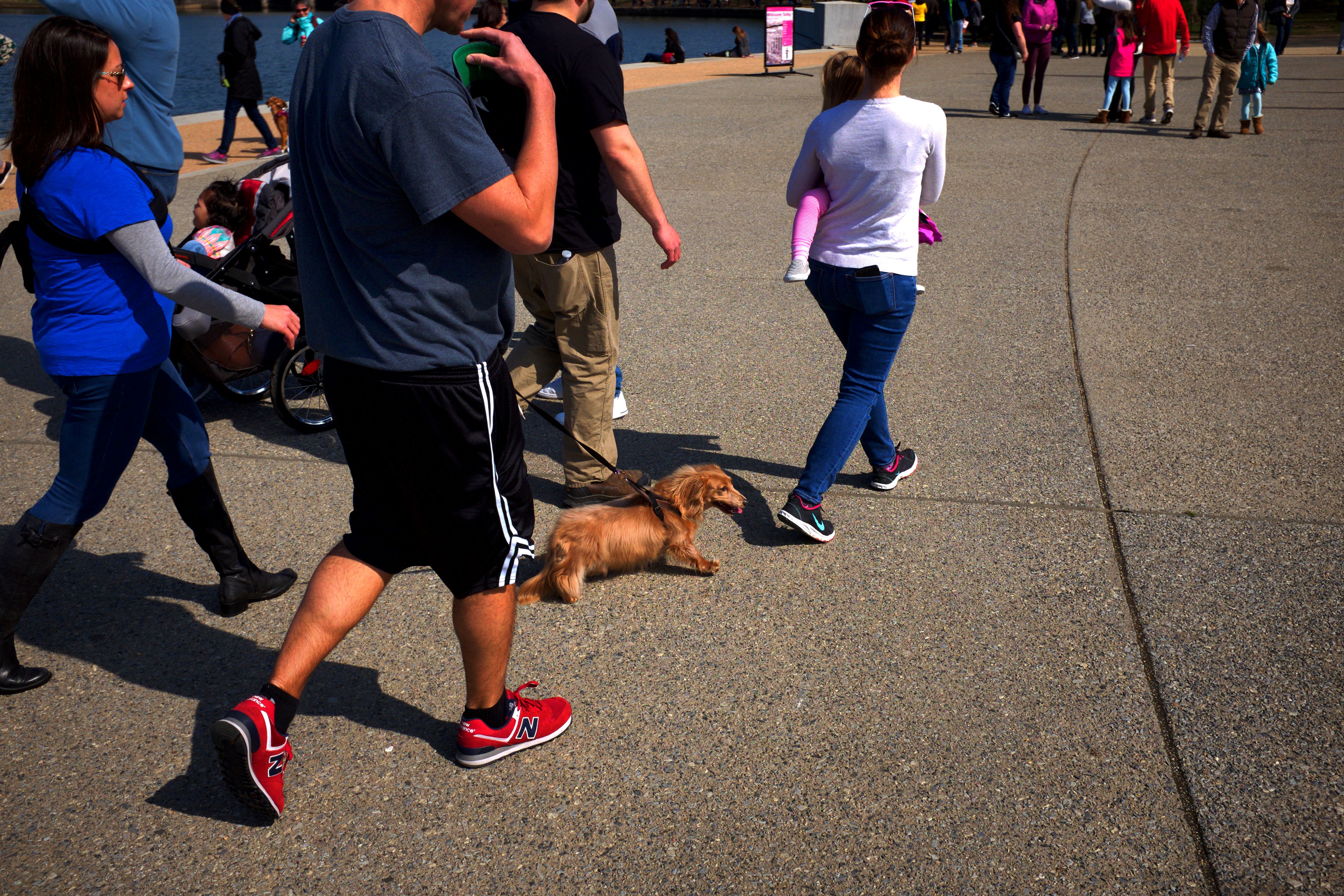
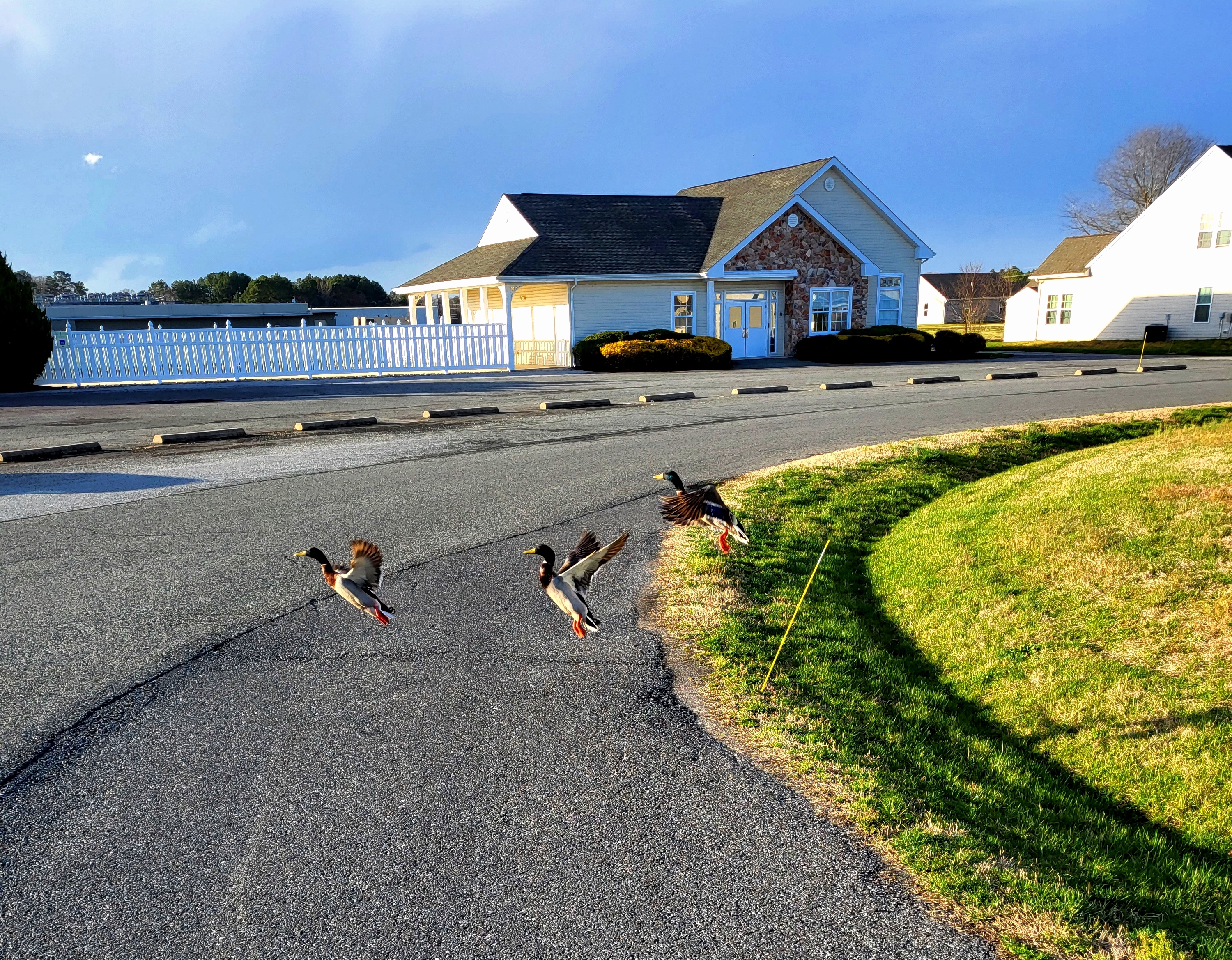


Spontaneous photos of people with their pets are obviously street photography. After that, it gets a bit more complicated. A photo of wild animals (even ducks or pigeons) on their own is urban wildlife photography. A photo of someone’s pet alone in their car (or on a leash tied to a sign) is about that animal’s relationship to their human. It’s still street photography. A cat scoping out the birds he wants to eat in an apartment window is urban photography. It’s not about a human relationship. The cat is just part of the display. Here, the photo is really about the window and the all the visible things in and around it.
As Maria points out, ask yourself, “What is this photo about?” The answer is the photo is about whatever dominates the frame. If the cat is 10% of the frame, that IS NOT A PHOTO OF A CAT. A dog on a leash dominating the frame is about the dog. As a tiny percentage of the image, it’s about the city.
Are people really required if there is art or trash or other evidence of human life?
Photography of organic beings (humans: street photography and animals: wildlife photography) cannot be lumped in with photographs absent life. They are different things. No one confuses wildlife photography with landscape photography. If I take a shot of a beautiful, empty grassland, no one ever says, “That’s a great wildlife photo!” So why are we doing that with people? This applies to the term “street photography.” A city, large or small, or even a farm is a human habitat. A shot of a city is urban photography. A shot of a farm is rural photography. A photo with people in these settings is “street photography.” It is candid, human documentary photography. If Sir David Attenborough wouldn’t narrate your photo of the human ape, then it ain’t street photography.
As photography progresses, we may see increasing differentials even within these narrow definitions. For instance, big city street photography may become distinctly different than small city or suburban street photography as laws surrounding taking photos differs. When that happens, we must be prepared for these photography definitions, these indexes, to evolve as well.
There are plenty of photographs taken on the streets of cars, buildings, and architecture. When do these photographs evolve from being street photography to other genres?
Architectural Photography: Maria and I propose that when the photographer is mainly showing us the work of builders and architects they are making architectural photographs.
Urban Photography: Urban photography focuses on city, town, and village environs, including, for instance, city streets, cars on roads, street art and signage. However, it is less of a celebration of architectural prowess than it is a rendering of the human environment. Were the location a natural setting, the urban photo would focus on the forest, while the architectural photo would detail the beauty and structure of individual trees.
We street photographers are wildlife photographers with the human ape our subjects. Sure, the forest will show up in our gorilla shots, but we care only about how our lovely primates survive there.
Cityscapes: Cityscapes are urban photos that focus broadly on skylines and other broad swatches of cities. Urban photography focuses on small things, often at the street level: store fronts, cars, traffic, etc. Cityscapes are, by definition, larger in scope.
Street Art Photos: This is a genre unto itself, but can be lumped under urban photography. Since it’s a photo of another artist’s work, it’s no different than shooting a painting in a museum, except that you are also documenting the effect of the painting on the museum (the city/building) itself.
To illustrate, let’s examine four shots from San Francisco’s Financial District, which I took in September 2017. The first, below, is standard street photography. The environment exists, but the photo is a human story and its protagonist stands in the lower half, walking in the non-chilly air, bundled up with a plastic bag over his hat.

Next, we stand back a bit, focusing on the odd Pyramid building, but juxtapose it with a red balloon someone placed on the street nearby. The balloon dares the pointy building to pop it, but it cannot. There are no people, but we see their residue, and they’ve left us a story to document. This, in my definition, is urban photography – the story of urban life. The balloon is a focus, not the structure of the building, so although there are architectural elements, it’s not strictly an architectural photo.

We are still looking at the pointy place, but now we are on a hill. There are people below us, and architecture all around. What genre is this? It’s urban photography. The people take up a small portion of the frame and are not its focus. The buildings are, but their structures are less important than the differences among them. This photo is about different architectural and human elements jammed into one beautiful cacophony. It is a small piece of cityscape–urban photography.

Finally, the all the humans are dead and we are left wandering the streets like Charlton Heston or Will Smith. (Y’all better have gotten that reference or I’m taking away your sci-fi badges.) Our photos have no human story except that we still marvel at all of the large-and-small-scale art they have left behind. The buildings are the story: their design, construction, and maintenance. This is in the urban environment, it transpires next to the street, but it is architectural photography.

For those seeking a more dynamic treatise, I curate a Street Photography feed on Bluesky which you can find by clicking the link you just passed. After a few frustrating weeks, I have decided to turn it into a feed of what I consider to be Bluesky’s best street photography, using the definitions above.
I may do the same with urban photography, including cityscapes. If so, I will amend this post with links to that feed.
Conclusion
Ten years ago, our definition of street photography was a bit broader, and included what we would now call “urban photography.” But photos of buildings, while on the street, do not capture what the genre’s founders intended to capture: Life. Spontaneity. Us. In urban photography, you can get hints of us, but we are fully missing from architectural shots.
Why don’t we just give up and let the photographers redefine street photography to be what they want? Because, it seems that they have forgotten that cities would not exist but for the people who live there. We believe it is important to honor the term “street photography” even though it is a misnomer, because the founders of the genres called it that. I am a street photographer. I go out into the streets and take photos of people. We are people watchers, with cameras.
In no way is any of this meant to denigrate urban photography. On the contrary, I hope to elevate it. I take as many urban photos as street ones. Let’s give all the urban photographers (I see you, Tokyo!!) their due. Let us no longer lump their artistry in with our documentary.
Landscape photographers like Ansel Adams never had to hide under a “wildlife photographer” umbrella. Let’s do the same with our art. Saul Leiter, Harry Gruyaert, and Ernst Haas were bloody brilliant, but they weren’t doing the same thing as Vivian Maier, Garry Winogrand, or Robert Frank. Just because photography book publishers are dumbasses doesn’t mean we have to be.
Cheers for reading and considering this.
As full disclosure, here is what I wrote in 2015 on the subject, in this very blog: “History of Street Photography, Part 1: The Evolution of Street.”


 The Artists' Sanctum