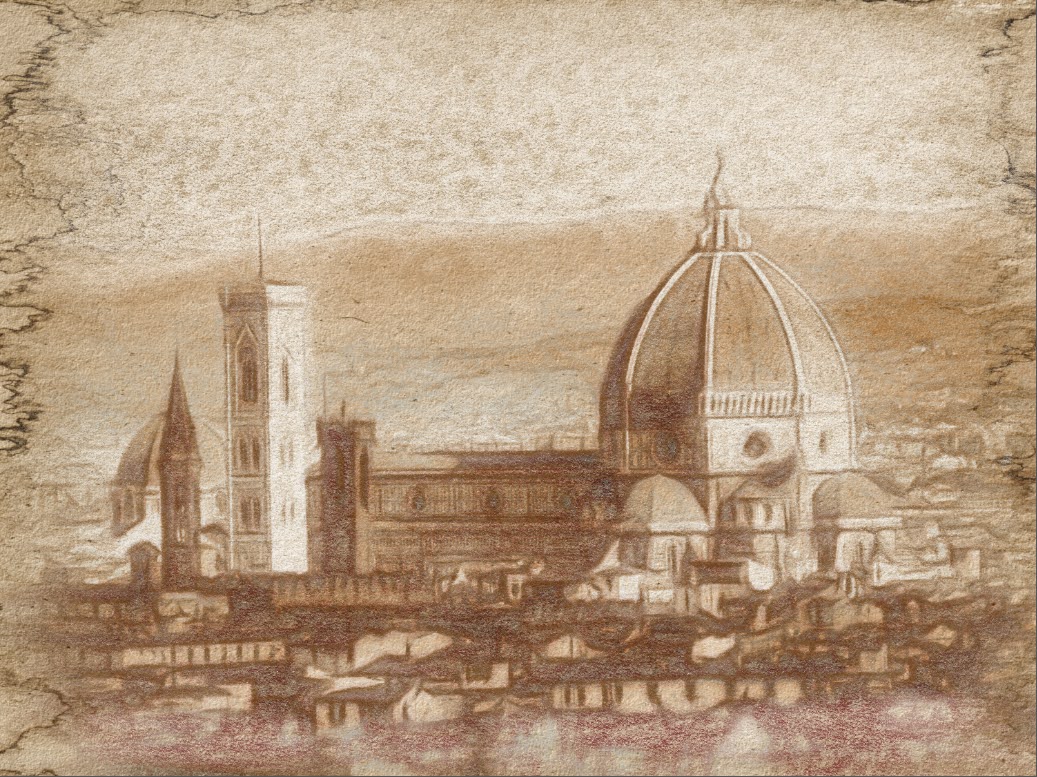
The way people respond to art is pivotal to its success. Though often, the way people actually respond to art can leave the artist wanting. As an artist, of course I desire feedback beyond the usual platitudes, but despite the inexhaustible wealth of opinions that people seem to harbour and express these days on all manner of things, inspiring a discourse about art would appear to stump even the most verbose of us. I am curious then, to explore this idea a little further.
As an artist, with long experience as a crafter of curiosities, and as someone with a deep interest and academic knowledge of art history and practice, I understand that the purpose of a work of art isn’t merely decorative. It is a dialogue that happens between the work of art in question and its viewer, and indeed the artist and the world in which the artist inhabits. What a work of art says and how it is understood depends almost entirely on the cultural references that the viewer and the artist share. For what is at play here is a visual language that is hoped can be mutually understood.
Art for whomever acquires it, is often a proclamation of status. It fulfils a need or desire on the part of the collector. No matter what that might be, a work of art is nevertheless a socio-political treatise of the times and the culture within which it is created, and so it is a powerful tool for communicating ideas and ideals that surpass mere verbal language, even if that ideal is just a bragging right that may not directly have anything to do with the art or the artist who produced it, or indeed with whatever mythology the art is being used to promote.
The artist of course, will have a different story to tell about the work they produce. For them, each work is a deeply personal statement of who they are, even if under strict instruction to produce a particular work. It still nevertheless bears the imprint of the artist, and is therefore, an intimate snapshot of their own internal sensory language and desire to communicate those ideas, however they may manifest. It is a stage upon which the artist performs his or her innermost realities through technical skill, that quite often is lost in its subsequent interpretation. Not through a lack of ability on the part of the artist necessarily, but because as people we each have a unique view of the world around us and within us, making the interpretation of art naturally subjective, irrespective of any shared understanding of the visual symbology that may or may not be present.
Furthermore, the more abstract the art, and the more divorced from current social and cultural references it is, the more difficult its visual language will likely be to decode. Take for example, an ancient cave painting: We can try to interpret its representative images on face-value, but without a knowledge of the circumstances and subsequent influences under which they were produced, there is no way of knowing for sure how to interpret them. We can perhaps say how they make us feel or try to talk about what we think they might mean based on ‘educated’ guesses, but their original meanings and references will have been lost.
Irrespective of the nature of the work of art itself, each person who views it and experiences it will have a different version of its greater story to tell. It is as personal an experience for the viewer as it is for the artist, quite removed from and including any possible cultural references, and it’s quite possible therefore, that the two versions of this tale will be at odds, thus rendering any possible discourse difficult at best. There are just too many factors involved, without further and more specific definition to aid understanding.
Clear and explicit communication is paramount if there is to be a consensus with any kind of information being exchanged. Without it, misunderstandings can arise, or at the very least, understanding will remain ambiguous. Each party must also be capable of articulating and expressing what they think and feel, and what’s more, have a desire to do so. Clear, concise communication therefore, can be a difficult thing to accomplish without strict parameters. Not just with regards to visual art, but within any social arena, and so we each rely on learned and practised cultural rules of discourse so that we might circumvent personal embarrassment and preserve social standing. The easiest way to do that is either to offer acceptable platitudes, which can also be used to initiate a discourse once mutual currency has been established, or to say nothing at all.
Over the course of my life, I have noticed that there is an unspoken rule that when viewing art, nothing need be said. A walk around a gallery is usually a silent, quick-moving affair for many, except for the odd few who like to enjoy the art they’re being an audience to. But few seem to spend time openly discussing what they see. I’ve often wondered what people are thinking and feeling, whether it’s abject boredom and confusion or something more emotional and personal. It’s hard to tell. Though, if I think about it, I realise that viewing art in this conveyor-belt fashion is rather an overload of visual information to have to process on-the-fly. And so, of course it’s difficult to say anything about it without stopping to give it some proper thought, not to mention being adept at articulating such.
Perhaps another part of this phenomenon is that we have become so accustomed to making quick decisions based on such a high exposure to visual art these days, that our interactive experience with art has succumbed to cultural apathy. Art just isn’t noteworthy anymore, unless it has achieved historical or fashionable acclaim. Even then, works like the Mona Lisa have become mere bucket-list items that visitors want to immortalise with an adjacent selfie to show off their cultural status and to gain cool-points.
Art in our modern times has lost much of its former historical mysticism. There is an abundance of it in our lives, not just in the form of works of fine art, but in every aspect of our daily lives, from the branding of our household products and foods, to the objects and equipment that we own and use. In fact, everything we purchase and own began life on an artist’s drawing-board. Prior to the turn of the 1900s, product branding was still very much in its infancy as was news media. The very concept of advertising with the use of art was seen as crass and needless. Art was still a highly valued commodity that drew much attention and inspired important discourse about its production and evolution. Its exclusivity was seen as an important political and scientific instrument in maintaining social etiquette and moral status, and if you were one of the few who could produce it or talk about it, it was a mark of your education and standing, and notwithstanding, of your masculinity. To demean it by commercialising it and thus making it available to all was seen as a great cultural offence.
These days, education and economic affluence have improved enormously and are more prevalent within the general population than they were a century or more ago. With economic stability comes a wealth of creative expression as people have more time, energy and resources to produce works of art. The downside is that this ready availability has changed more traditional forms of art into something of a hobbyist’s pursuit, and its exclusivity has been lost to mainstream commercialism, so it’s just not special anymore.
Yet, none of us could now imagine a world without art and artistic design. It’s just that the way we talk about art and the art of cultural design has changed indelibly, for good and bad. The shifting identity of culture is a work of art in itself. But it’s as complex as each of us is unique. How then, can we possibly define and discuss that which is so complex in a way that is easy to digest, and what’s more, that engages our interest?
As an artist I might argue that any discourse about the work I do is better than no discourse at all, and so, whether the message of the work in question is understood or not is rendered moot. In this light, it would seem, that every work of art ever produced and to be produced, is more about the nature of the human condition in an encapsulated form, than it is about whatever it pretends to represent. It is a window into what it means to be human, and there is plenty to be said about that.


 The Artists' Sanctum
“It is a dialogue that happens between the work of art in question and its viewer, and indeed the artist and the world in which the artist inhabits. What a work of art says and how it is understood depends almost entirely on the cultural references that the viewer and the artist share.”
That’s a profound statement, as it describes a couple of salient points, and not one I’d really thought about before. First, it accurately describes what “a work of art says” and thus, to an extent, what it is, as a communication and consensus between the artist and viewer. Artists can produce whatever they want, but the piece isn’t complete until someone views and decides what it means. To an extent, the work is an offering or the opening of a negotiation, but we need input from a viewer before it’s complete. That being true, a piece work of that no one discusses sits almost unfinished. I don’t think most people consider what their role is in the process.
In addition, this reminds us that cultural references the viewers have mean the work can be almost infinitely interpreted. We, as artists, can assume a piece we’ve made means one thing, but if everyone else sees something different, then who is right?
People are flooded with art, and yet no one tells any of us anything about how to interpret, describe, or interact with art. So artists crank works out, wondering if they are really any good, or if they just happen to be the kind of work the artists happens to like. In some way, I wonder if artists are seeking feedback because we’re out here looking for our tribe, presenting some virtual cave drawing in hopes that our people will see it and follow us home.
LikeLiked by 2 people
I’ve read what you wrote, and how you very eloquently summarised what I was trying to articulate with this essay. That a work of art is a collective collaboration, and that as you quite rightly say, it remains in stasis almost until it is given avenues of completion through further exploration by prospective audiences. For me as an artist, it adds an extra dimension to a work that I might consider finished. I agree with your notion that in wanting feedback for a so-called ‘finished’ work, we are as artists searching for our tribe, and a way to connect with our tribe.
Being taught about art and knowing how to interpret it isn’t really taught unless you specialise in the field of visual semiotics or art theory and history. But I think it would be a valuable class for everyone to take, because it might help people understand how social dynamics work at every level. Art is integral to societal communication, because communication can’t be separated from human design and creativity.
LikeLike